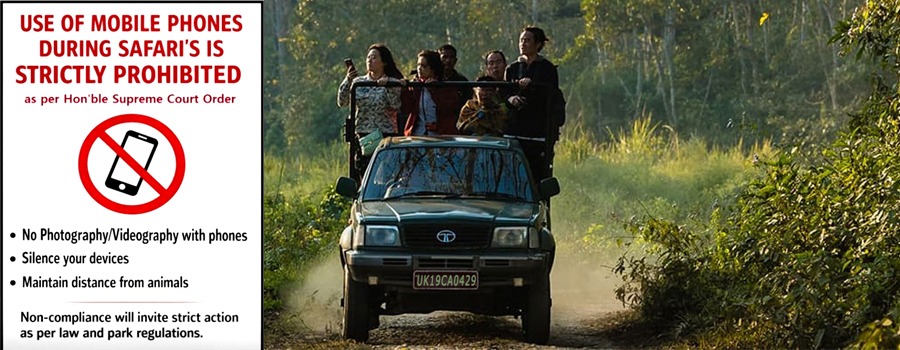
Ramnagar, Uttarakhand — January 2026: In a landmark move to strengthen wildlife conservation and ensure more responsible tourism, the Corbett Tiger Reserve (CTR) has introduced a strict ban on mobile phones during all jungle safaris across its tourism zones. The new rule now in effect across the reserve prohibits visitors from carrying mobile devices into safari areas — a significant shift from past practices where tourists routinely used phones to capture photos and videos.
Supreme Court’s Conservation Mandate Behind the Rule
The ban is being implemented to comply with directions issued by the Supreme Court of India which has stressed the importance of minimizing human interference in sensitive wildlife habitats. According to the apex court’s broader wildlife protection guidelines, activities that disturb natural animal behavior — including unrestricted mobile phone use, night tourism and safaris in core habitats — must be curtailed to protect endangered species like the Bengal tiger.
A key part of the legal directive prohibits mobile phone use in core zones of tiger reserves to reduce noise, disturbance, and inadvertent crowding at animal sightings.
How the Ban Will Work on the Ground
Under the new system: Visitors must deposit mobile phones at the safari entry gates before entering the forest. Only professional cameras such as DSLRs will be allowed inside, enabling serious wildlife photography without contributing to disturbance. The rule applies to all safari participants, including tourists, guides, naturalists, and even staff working in the core safari zones. Strict action and penalties will be enforced for violations, with authorities emphasizing zero tolerance to protect wildlife and uphold legal mandates. The move covers all major safari zones of Corbett National Park, such as Dhikala, Bijrani, Jhirna, Garjia, Sonanadi, Pakhro and others — whether for day safaris or overnight wildlife experiences.
Why the Ban? Conservation First
Officials say the ban is rooted in protecting natural animal behaviour and safety inside the forest: Frequent use of mobile phones for selfies and videos has led tourists to get too close to wildlife, causing discomfort and at times potentially dangerous interactions. Mobile networks were often used to share real-time animal locations, attracting multiple safari vehicles to one spot which disrupts ecosystems and stresses animals.
Noise and light from phones — especially camera flashes and ringtones — can disturb sensitive wildlife and reduce the authenticity of the safari experience.
Corbett officials believe that removing mobile phones from the safari experience will allow animals to behave naturally, reduce crowding at sighting locations, and offer visitors a more immersive and responsible wildlife encounter.
Expert and Visitor Reactions
While wildlife biologists and conservationists have largely applauded the decision — calling it a positive step toward reducing human impact on endangered species — some tourists have expressed concern about not being able to document their experiences. However, officials argue that professional camera use still allows memory preservation without compromising ecology.
Tour guides and safari operators are currently being briefed on the new guidelines to help visitors adapt to the changes and maintain compliance.